
Modern JS, ES6, HTML5, and CSS have gotten ridiculously capable, yet we keep piling framework after framework on top until building simple software feels absurdly complicated.
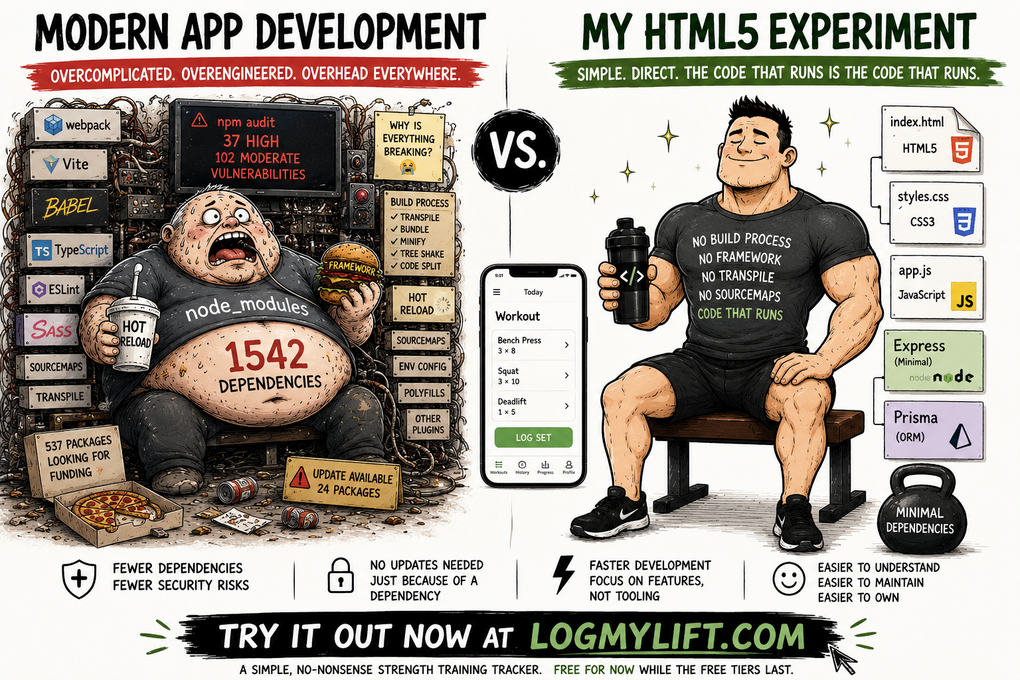
At some point the ecosystem became:
Endless dependencies
Constant package updates
Breaking changes
Sourcemaps
Transpilers
Build pipelines
Layers of abstraction on top of layers of abstraction
And honestly – we’re not writing less code anymore for the same output.
So I decided to vibe code an experiment – what if I built something with almost no abstractions?
Frontend:
No frameworks
No React
No Tailwind
No Typescript
No sourcemaps
No build process
The code that’s written is the code that runs.
Just plain JS, HTML, and CSS.
No emergency upgrades because a framework plugin broke.
No dependency vulnerability alerts because some nested package 14 levels deep has a CVE. Imagine what Mythos is going to find in all your dependencies.
No spending weekends updating tooling just to stay “current.”
Plain HTML/CSS/JS written against browser standards tends to just… keep working.
No dependencies are the best dependencies.
Backend:
Minimal dependencies
Express + Prisma
No build process here either
Honestly, build processes feel like something that belongs in the last century. The whole point of scripting languages was to avoid all of that.
Instead, modern web development keeps reinventing old compiled-language workflows:
edit → transpile → bundle → rebuild → hot reload → regenerate sourcemaps → refresh
Think about how much technology is involved just to rebuild things on the fly while editing code. A huge amount of frontend complexity exists because we keep trying to treat web development like desktop development from the 90s. Meanwhile browsers and JavaScript engines got insanely good years ago.
I needed an excuse to try this experiment, and my wife paying $8/month for a strength training tracker was enough motivation 😄
So I built:
Log My Lift
It’s intentionally simple.
Track workouts. Track progression. Get out of the way.
Ironically, the AI credits I used building it probably cost me about 6 months of that subscription anyway. Still worth it. One thing I’m noticing with AI-assisted development: as code generation gets easier, simplicity starts mattering more, not less.
The less framework magic involved, the easier it is to reason about what the AI is actually building. Also, this is not a monolith app.js file. It’s fairly decently architected (for a 100% vibe coded app) with reusable web components. The deployment time is 20s on average. In comparison, most of the other apps I work with have multi-minute build + deploy times.
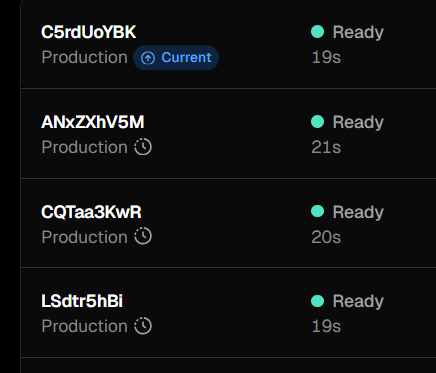
It’s free for now while the Vercel and Supabase free tiers can still handle it – so if you’re interested, sign up now before I get motivated to add billing.
And even if I eventually charge for it, it definitely won’t be $8/month.
Maybe $8/year.